Future-Proof Your Cafe: The Modern Tech Stack for Growing Coffee Roasters and Shops
| Cropster
The world of specialty coffee is defined by passion, quality, and community. But as competition rises and margins shrink, what separates a thriving coffee business from one that’s just surviving? The answer, increasingly, is technology.
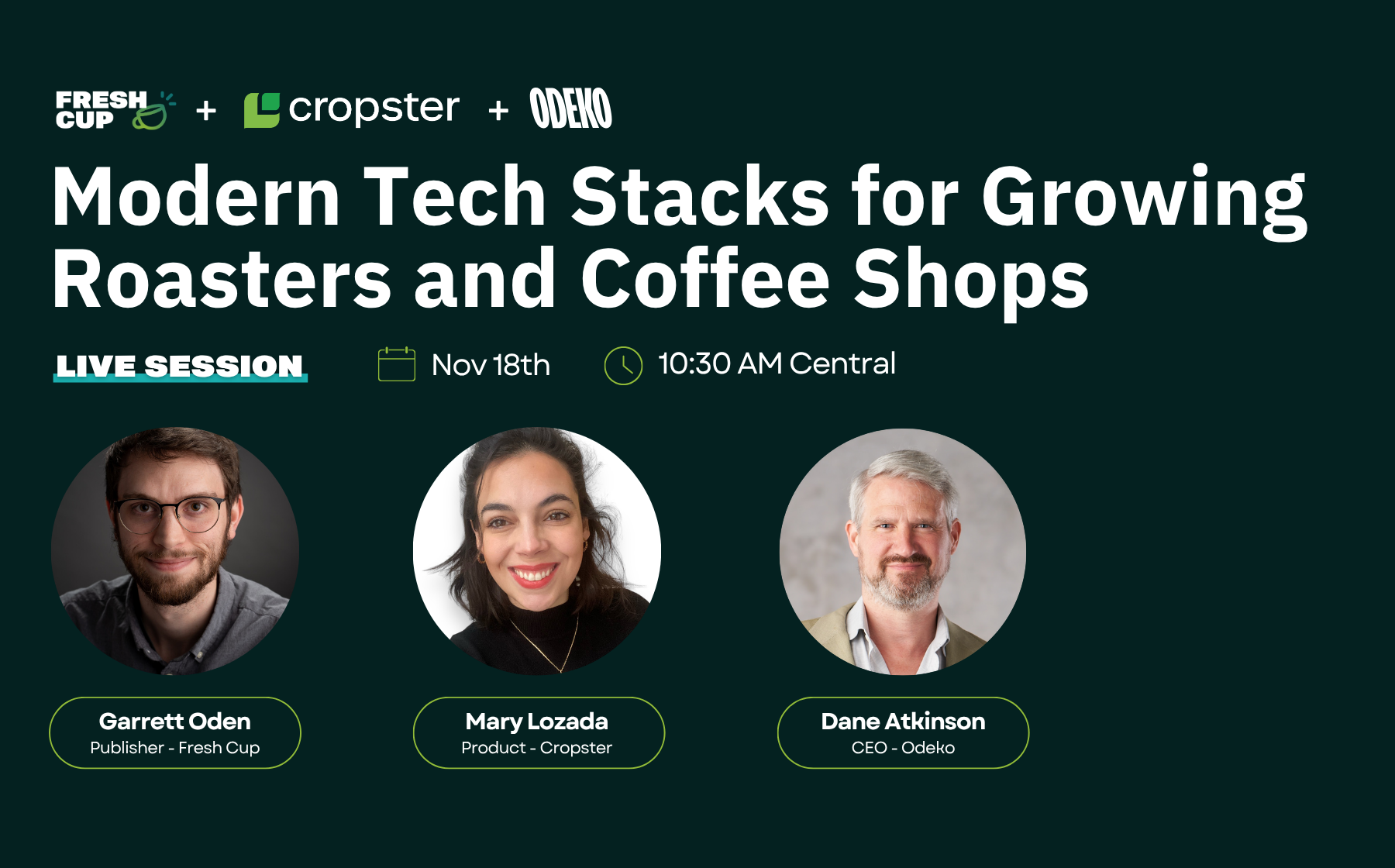
We recently hosted a live session with Odeko to discuss how growing roasters and cafes can move past frustrating, duct-taped systems and adopt a smart, modern tech stack.
Here are the key insights and practical takeaways from the discussion:
1. The Shifting Coffee Tech Landscape
Not long ago, coffee businesses relied on paper, spreadsheets, and basic point-of-sale (POS) systems. Today, the market is saturated with specialized tools.
According to Dane Atkinson, CEO of Odeko, small businesses on average juggle 12 different software subscriptions, often only getting value out of two-thirds of them. This creates silos of information and wastes valuable time.
The Solution: The industry is moving toward specialization and integration. Companies like Cropster are building full “Coffee OS” platforms that act as a single source of truth for all operations, making data flow seamlessly from the farm to the cup.
As a partner to many growing coffee shops, Odeko directly tackles this fragmentation problem. They offer simple, integrated solutions designed to consolidate core business functions like mastering their local SEO and customer reviews replacing multiple subscriptions with easy-to-use digital tools.
2. Where Time, Money, and Energy are Wasted
The panel identified three major areas where poor tech stacks cost businesses:
| Waste Area | The Problem in Practice |
|---|---|
| Data Duplication | Manually inputting a coffee SKU or origin name into eight different systems (inventory, e-commerce, POS, newsletter, etc.), leading to inevitable errors. |
| Inventory & COGS | Failing to track Cost of Goods Sold (COGS) precisely, especially for ingredients with variable costs (like milk or green coffee), which can erode thin margins. (Starbucks operates at ~26% COGS, independents often hit ~37% COGS.) |
| Quality Control | Relying on sticky notes for recipes, leading to inconsistencies between baristas and shifts, resulting in wasted coffee and a dip in customer-facing quality. |
It’s important to know your costs, and it’s the single most important priority for a startup cafe owner.
3. How to Evolve Your Tech Stack as You Grow
Growth brings complexity: more volume, more locations, and a shift in team dynamics. This is when your tech needs to do the heavy lifting.
- The 5-Location Tipping Point: Around this milestone, the person responsible for QC and training hits maximum capacity. Technology like Cropster’s telemetry (IoT) allows managers to monitor brew consistency and machine health remotely, enabling them to transition from a daily rounds strategy to a more tactical, data-driven role.
- Tackle Tech Stack Fragmentation: Small businesses are usually juggling an average of 12 different, often unintegrated, software subscriptions, which creates silos of information and leads to inefficiencies. Odeko consolidates them all in 1, easy-to-use platform that saves time and drives new customer traffic.
- Prevent Downtime with Asset Management: Specialized software can track assets (espresso machines, grinders) and link maintenance schedules (like water filter changes) to actual brew counts. This preemptively flags issues like leaky group heads that could otherwise cause costly downtime.
- Roastery Efficiency: Roasters must evolve from managing one production line to potentially two or more. Technology is critical for:
- Optimizing roast scheduling and production lines.
- Refining purchasing decisions based on detailed consumption data from wholesale and retail customers.
4. Practical Technology Wins for Immediate Impact
The presenters shared two concrete ways operators can use technology for immediate business improvement:
A. Master Your Customer Reviews & Local SEO (Odeko)
Google is the primary discovery tool for new customers: over 60% of new customers search “Coffee near me.” Your Google rating is a binary gate: if you don’t have at least a 4.5-star rating, you are virtually invisible on the map results.
- Actionable Strategy: Use simple, digital tools (like the one Odeko offers) to drive customers to leave reviews while they are in your shop using QR codes.
- The Payoff: Shops using this strategy have seen a 10–20% increase in Google reviews, translating to a 5–7% increase in actual store traffic—an immediate lift in revenue.
B. Create a “Coffee Source of Truth” (Cropster)
Stop working from a fragmented tech stack. Consolidate your data to save time and reduce errors.
- Integrate Sensory Notes with Marketing: When you create a roast profile and log your cupping notes in your operating system, that data should be easily pushed to your website and price lists, cutting out manual steps for the marketing team.
- Automate Quality Control: Use Cropster Cafe’s telemetry to monitor if your baristas are brewing within the target range. This information is invaluable for:
- Training and Onboarding: Identifying where new staff might be struggling.
- Forecasting: Using consumption data to avoid over- or under-ordering coffee from your roaster.
Final Takeaways
Growing a coffee business is hard, but the passion that started your journey is its greatest asset. Mary and Dane agree: the winds are shifting in favor of independent shops.
Use the right technology to handle the heavy lifting of operations and free yourself to focus on what you love: your customers and your coffee.
Ready for a Single Source of Truth?
Take control of your quality, inventory, and asset management with the platform designed specifically for the coffee industry.
📈 Try Cropster Cafe Free 📈