The 15% Leak: What the Redbank Case Study Teaches Us About Capital Recovery
| Cropster
Most roasteries do not have a waste problem. They have a visibility problem.
The waste is already happening. The stock is already sitting past its window. The purchasing decisions are already being made on gut feeling and manual stock checks. The difference between a roastery that recovers that margin and one that keeps losing. It is not talent, effort, or even scale. It is whether the systems running the business can see the problem clearly enough to fix it.
Redbank Coffee Roasters could not. Until they could.
The Problem Was Familiar
Mike Dickinson, Operations Manager and Head Roaster at Redbank, was running a tight operation. A two-person team producing 750kg per week, focused on quality, attentive to detail. By most measures, a well-run roastery.
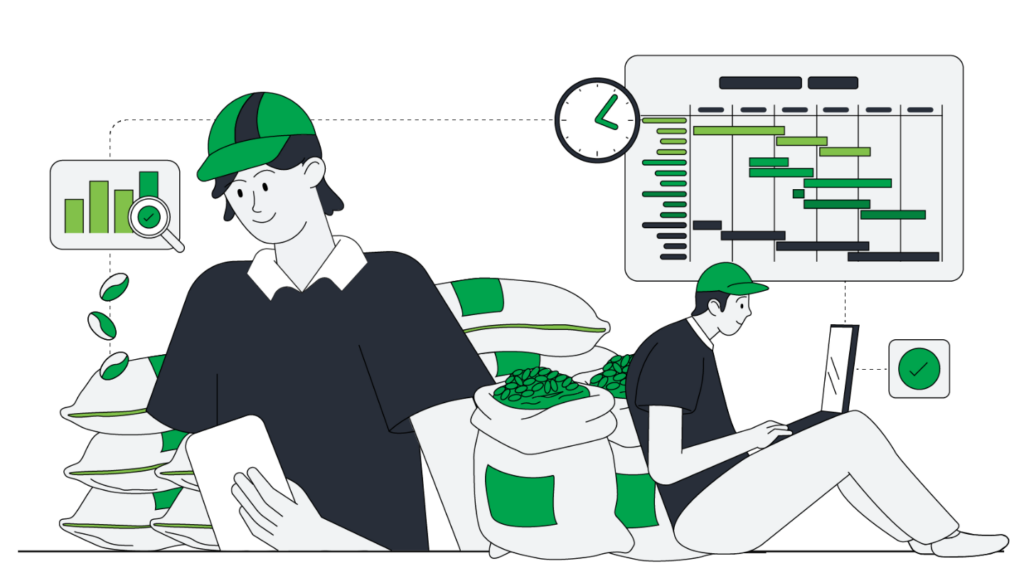
But underneath the surface, the cracks were structural. Stock control was manual, which meant inventory decisions were based on estimates rather than data. Scheduling took an hour every day, an hour that came directly out of roasting time. Roast profiles between batches were hard to compare without a centralised system. And without reliable data linking purchasing to production, 15% of coffee was being used below its potential: blended away past peak or lost to poor inventory planning.
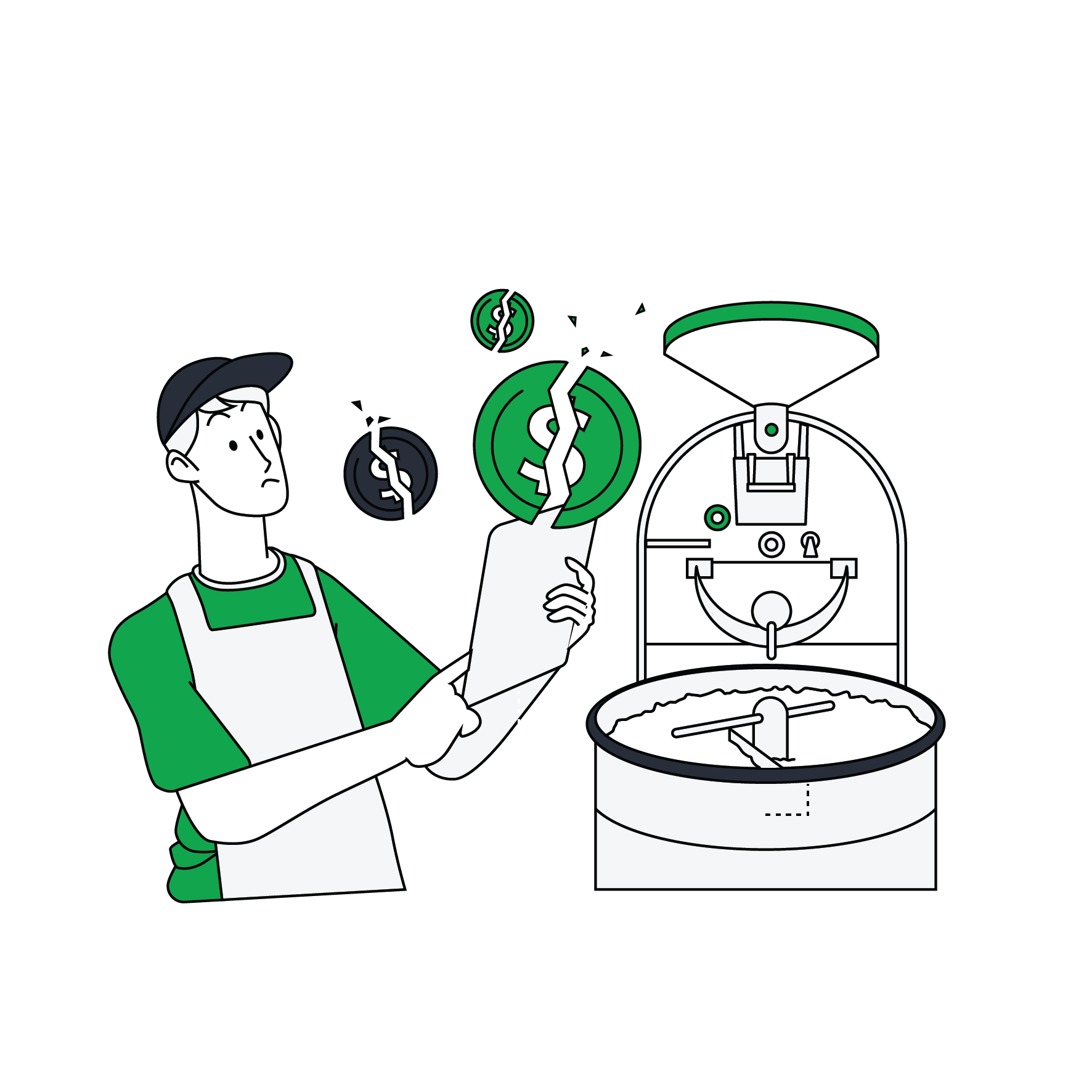
For a roastery at Redbank’s volume, that is not a rounding error. That is frozen capital leaving the business every month.
The Turning Point
The shift was not a crisis. It was a recognition.
Redbank was already generating the data their business needed: roast logs, inventory figures, cupping scores, batch histories. The problem was that none of it was connected. It existed in separate places, in separate formats, and it could not drive decisions because no one could see all of it at once.
The realisation, as Mike describes it, was simple: the data they were already creating could do more than record what happened. It could tell them what to do next.
What They Changed
Connecting their systems did not mean starting over. It meant making what already existed work together.
Inventory linked to production meant purchasing decisions were based on real stock levels, not estimates. When the system could see what was on the shelf and what orders were coming in, over-ordering and under-ordering became measurable rather than invisible. Proactive ordering replaced panic buying.
Scheduling changed, too. The hour Mike spent every morning building the day’s roast plan from manual checks dropped to minutes. That hour, recovered every morning, is 20 hours a month, half a working week returned to the business.
What They Recovered
The headline number is 15%. Wasted coffee was reduced by 15% through inventory management: coffee used at peak, stock right-sized to actual demand. For example,for a roastery spending €1,536,000 annually on green coffee, that is €230,400 recovered, not from cutting costs or finding new efficiencies, but from stopping a leak that was already there.
The scheduling hour disappeared. Team morale improved because the workflow was clear and the data was trustworthy. And Mike’s summary of the whole thing is the most accurate description of what actually changed: “It’s not a roast profiling tool. It’s a business management tool.”
What It Means for Your Roastery
Redbank’s story is not exceptional. It is instructive.
The conditions that created their 15% leak: manual stock control, disconnected systems, and purchasing decisions made without demand visibility, exist in most roasteries operating at the growth stage. The leak does not announce itself. It accumulates quietly, month after month, in the gap between what your systems can see what is actually happening on the floor.
The 15% is not a Redbank number. It is a benchmark. The question is not whether a version of it exists in your operation; the question is how much it is worth to you specifically.
We built a report that shows you how to calculate it across procurement, roasted stock, and admin time, at your volume, in your currency.