From Scramble to System: How Demand-Led Production Recovers 20 Hours a Month
| Cropster
Most roasteries do not have a production planning problem. They have a demand visibility problem. Many roasteries plan production based on memory, habit, and gut feeling. Usually, the orders come from multiple channels and are never visible in one place. So the staff loses hours every day browsing different channels, checking all messages, and piecing together a production plan, hoping that nothing was forgotten. Sounds familiar?
The result is a reactive production. You are scheduling your roasts based on what you think has been ordered, not what actually has been. All this creates a growth ceiling because the more you scale, the worse the issue gets. More orders fall through the cracks, over- and under-production become more common, and morale on the production floor drops.
It is a systems problem. And the solution is demand-led production.
What Demand-Led Production Actually Means
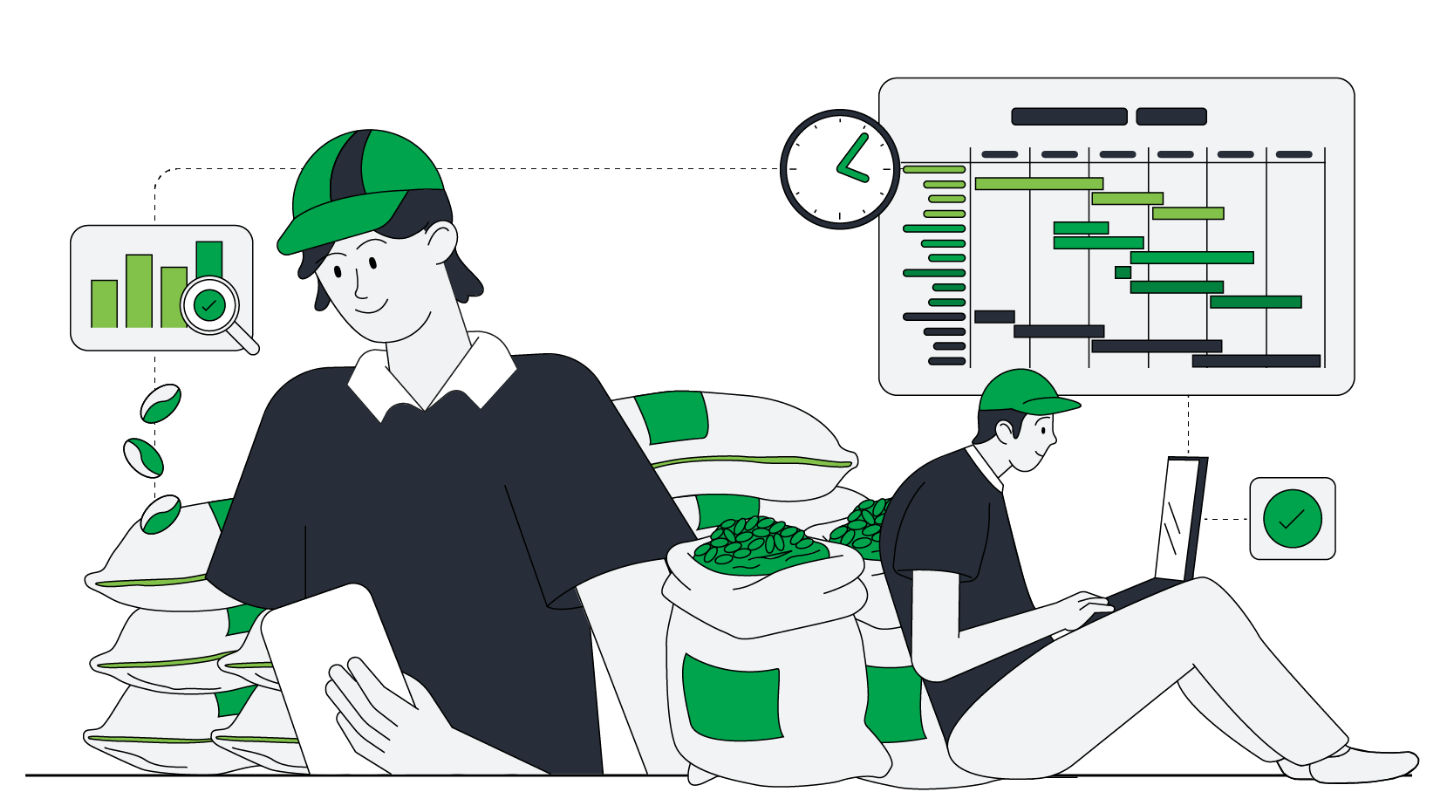
Demand-led production is actually simpler than it sounds. Your orders tell the system how much to roast. The system builds the schedule. You focus on the coffee.
You do not have to focus on manual consolidation of all orders from multiple channels into one spreadsheet. The system aggregates them in real-time. Suddenly, you don’t have to plan based on your gut feeling, because you have all the data in front of you, and the production plan is based on actual demand. The production becomes predictable, consistent, and repeatable.
The shift is not only about operations, but it also changes how the whole business makes decisions. Finance, production, and fulfillment teams all work from the same picture.
From Pen and Paper to 20 Hours a Month
A UK roastery producing 750 kilos a week with a two-person team was running on pen and paper. Scheduling consumed an hour every morning, and manual stock control was causing 15% green coffee waste.
After connecting the system with Cropster, that hour came back. Over a working month, that is 20 hours recovered. No extra hires, no longer working days. It was enough to connect demand to production.
The results speak for themselves:
- 20 hours a month recovered on production planning
- 10–15% reduction in wasted coffee usage
- 98% roast goal success rate
- Purchasing decisions backed by real data, not estimates
- Boosted team morale with a clear, data-driven workflow
What Better Coordination Unlocks
The time saving is the most visible result. But it is not the most important one.
When production is tied to the demand, the inventory becomes accurate and trustworthy. Your team stops second-guessing stock levels and production plans and starts making confident purchasing and planning decisions. When you and your team are no longer spending your mornings piecing together a roast schedule, you can focus on roasting, quality control, and the work you actually came to do.
The business is no longer dependent on one person’s memory and starts running as a system.
Ready to Make the Shift?
This blog post describes what demand-led production looks like and why it works. The No-Scramble Blueprint shows you how to build it, from aggregating your orders into one view, to automating your roast schedule, to closing the loop from green coffee to shipping.