Why Ernst Kaffee wouldn’t start a roastery without Cropster
| Cropster
Ernst Kaffee started in February 2014 as a small coffee shop in the south of Cologne. Today it runs two shops, an online shop and a roastery that supplies cafes and other roasters, with about 35 tons roasted in 2025. Founder Maren Ernst handles buying and joins the weekly cuppings, while her husband runs the roastery with two roasters. They have roasted with Cropster since October 2015.
We spoke to Maren about how the roastery worked before Cropster and how the team uses Cropster Roast today.
The challenge
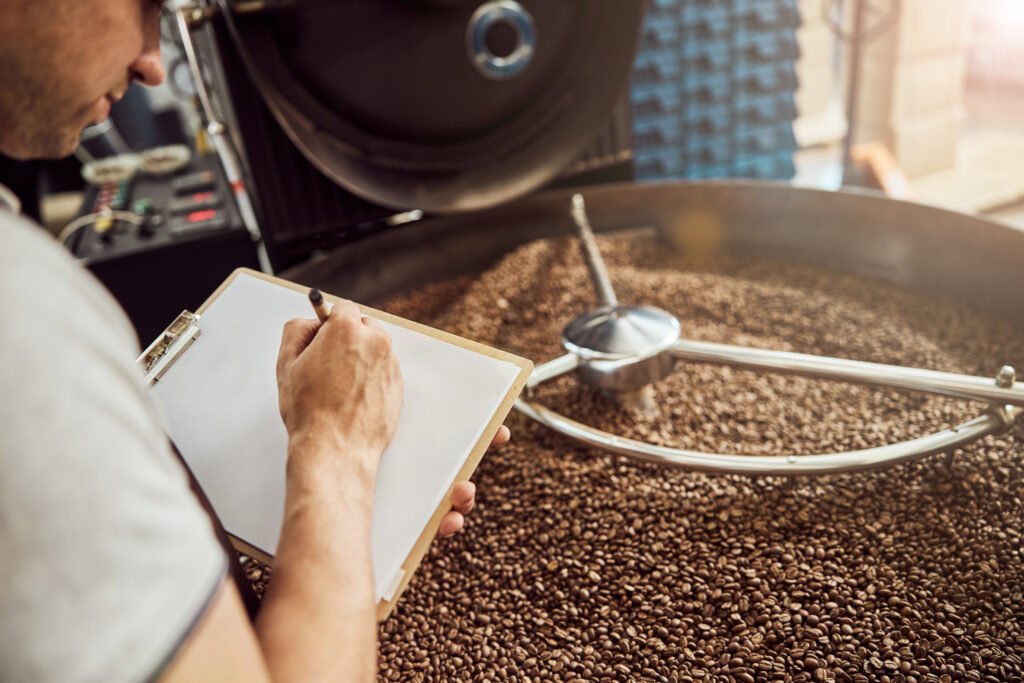
In the first year, every roast was logged by hand on a printed sheet, with a reading every 30 seconds. The logs existed, but there was no way to compare roasts or learn from them. For the monthly coffee tax, they also had to be typed into Excel and sent on. That worked in the early days, but Maren could see it would not hold up once volume grew.
Comparison mattered because the menu keeps moving. Ernst Kaffee has six to seven coffees on the shelf and changes them every two to three months, with some lots as small as 24 kilos. Even the blends drift, as a Brazil changes over the year. And as more people started roasting, Maren found it harder to keep track of what was happening in the roastery.
The solution
Cropster Roast gave the team a history of every roast to look back on.
I think that is the core of Cropster, to really understand your roasts.
Maren Ernst, Founder of Ernst Kaffee
The three roasters use the same profiles and data to decide what to change, and can ask for a second opinion when a roast isn’t going right. For about a year they have also recorded density, moisture and roast color for every coffee and roast. For the coffee tax, Maren now prints the production log and fills in the kilos. Their local tax office accepts these records, though she notes that some German tax offices still ask roasters for handwritten logs.
New coffees usually start on the smaller of their two roasters. The team learns how a coffee behaves there, then moves it to the large machine, with earlier roasts as a reference. Maren is clear that it is still trial and error, even after more than ten years.
After a roasting class last year, the team also changed its approach. They now pay closer attention to the balance between drying, Maillard and development, using phase data that had been in Cropster all along.
The impact
Maren no longer roasts day to day, but she can follow the roastery from her desk. Every Monday she checks green coffee stock, including lots still at the warehouse in Hamburg, and orders before a coffee runs out. When a batch brew in one of the shops tastes off, she can trace it back to the batch and the roaster.
Feedback from the shops works the same way. When the house blend tasted less smooth than it had two weeks earlier, the team first compared the profiles. They matched, which pointed to a cause outside the roast, such as the weather. For Maren, finding that out quickly is what counts.
She doesn’t put a number on what Cropster saves, since they have used it almost from the start. She does think there would be more failed roasts without it, though she can’t say how many. Her advice for anyone opening a roastery:
To me it (Cropster) is mandatory. It’s not something nice to have on top of everything. If you start a roastery, you can’t do it without it.
Maren Ernst, Founder of Ernst Kaffee