Dak Coffee Roasters roasts 4,000 kg a week. One number decides what gets cupped.
| Cropster
Dak Coffee Roasters started in a shared co-roasting space in Amsterdam, roasting small volumes on a single machine, with one of the co-founders doing the roasting himself.
Stefano Ciamarra worked in that same facility at the time, roasting for other clients. Dak was one of them. A couple of years later, he moved across to roast for Dak directly, and the co-founder handed him most of the production. The roasting team was 2 people. Today it is 6.
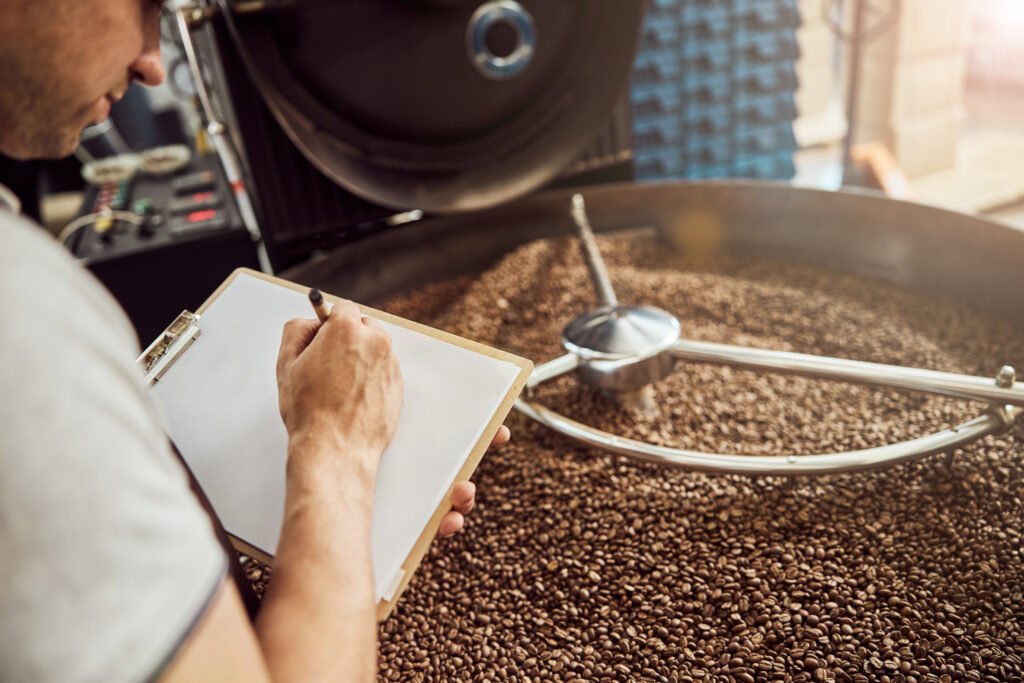
They run two 15 kg IMF machines, both together for four or five days of the week and singly or at half capacity for the rest. On a full day, that comes to around 70 batches. Across the week it comes to roughly 4,000 kg of green coffee, most of it going to cafes in the UK and the US, with accounts opening in Asia and a smaller web shop selling direct.
Why Artisan and spreadsheets stopped working
Cropster came in when order volume started climbing, and Dak began buying more types of coffee. Artisan had handled the roast logs. Spreadsheets held the rest.
The quality of the recordings, the graphs, the user interface, that was a step up from Artisan to Cropster
Stefano said, looking back on the switch.
At 70 batches in a day, nobody has time to assess each one by hand before deciding where it goes. The roasting queue also has to match what the packing and dispatch teams are shipping that day, across 2 machines running side by side.
One filter, applied to every roast
Dak sets Roast Goals on every batch, mainly on weight loss. A batch that lands inside the target carries on to packing. A batch that misses gets pulled for cupping.
It changed quite a lot the way we work. We’re able to see, for every roast, if we meet the goal. That tells us immediately if we need to put a batch aside for QC
The cupping decision itself stays deliberately simple. Approved or not approved, then straight into the team’s channels so packing and dispatch see it without waiting. At 70 batches a day, a longer form would slow the floor down more than it would improve the coffee.
The schedule comes from the floor, not the roaster
Dak’s packing and dispatch team uploads the day’s roasting requirement into Cropster. The roasters open the schedule and work from it, which removes the daily rebuild of a plan from scratch.
Roasting Intelligence handles consistency between batches on the 2 IMF machines. Cropster gained direct control of IMF machines about a year ago.
Results
- 4,000 kg of green coffee roasted weekly, across 2 machines running 7 days.
- Up to 70 batches on a full production day, each one checked against its goal automatically.
- A roasting team that grew from 2 to 6 in under 2 years.
If you want more control, not just over your roasts but over everything that happens in your roastery, I think it’s a necessary tool to speed up your workflow and increase your production volume. It simplifies all your information into one platform, and the interface helps a lot too
When asked what he’d tell another roaster considering Cropster, Stefano kept it simple.
If your batch count has outgrown the checks you do by hand, see what Roast Goals does at volume.