From scattered systems to one pipeline: how Scenery built on the Cropster API
| Cropster
How a London roastery connected every part of its coffee program, and grew from 100 single origins a year to 150 with the same team
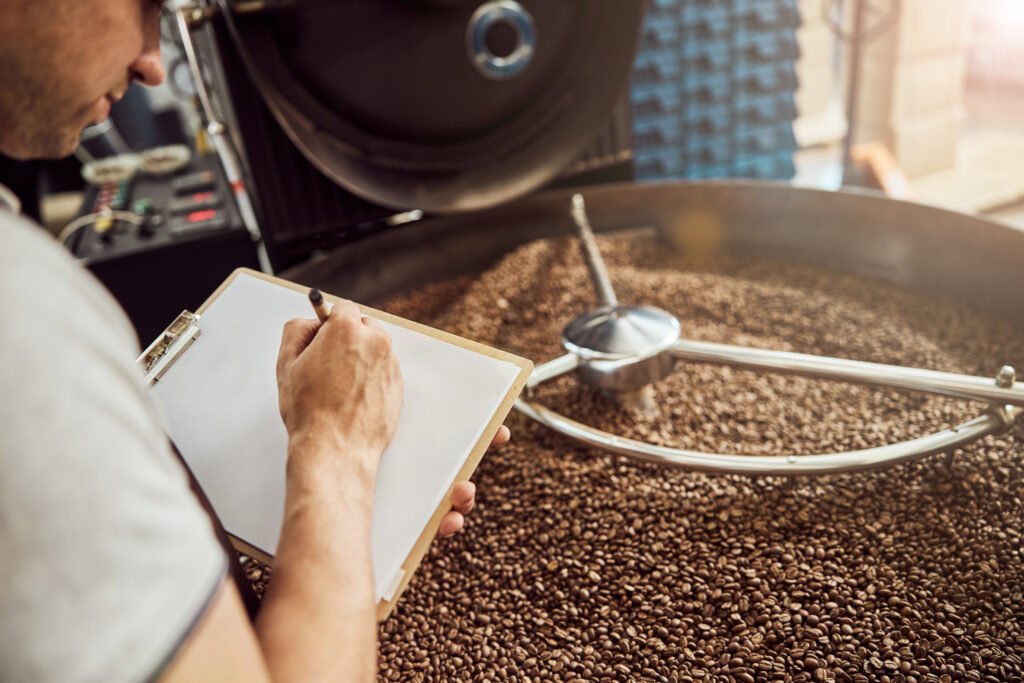
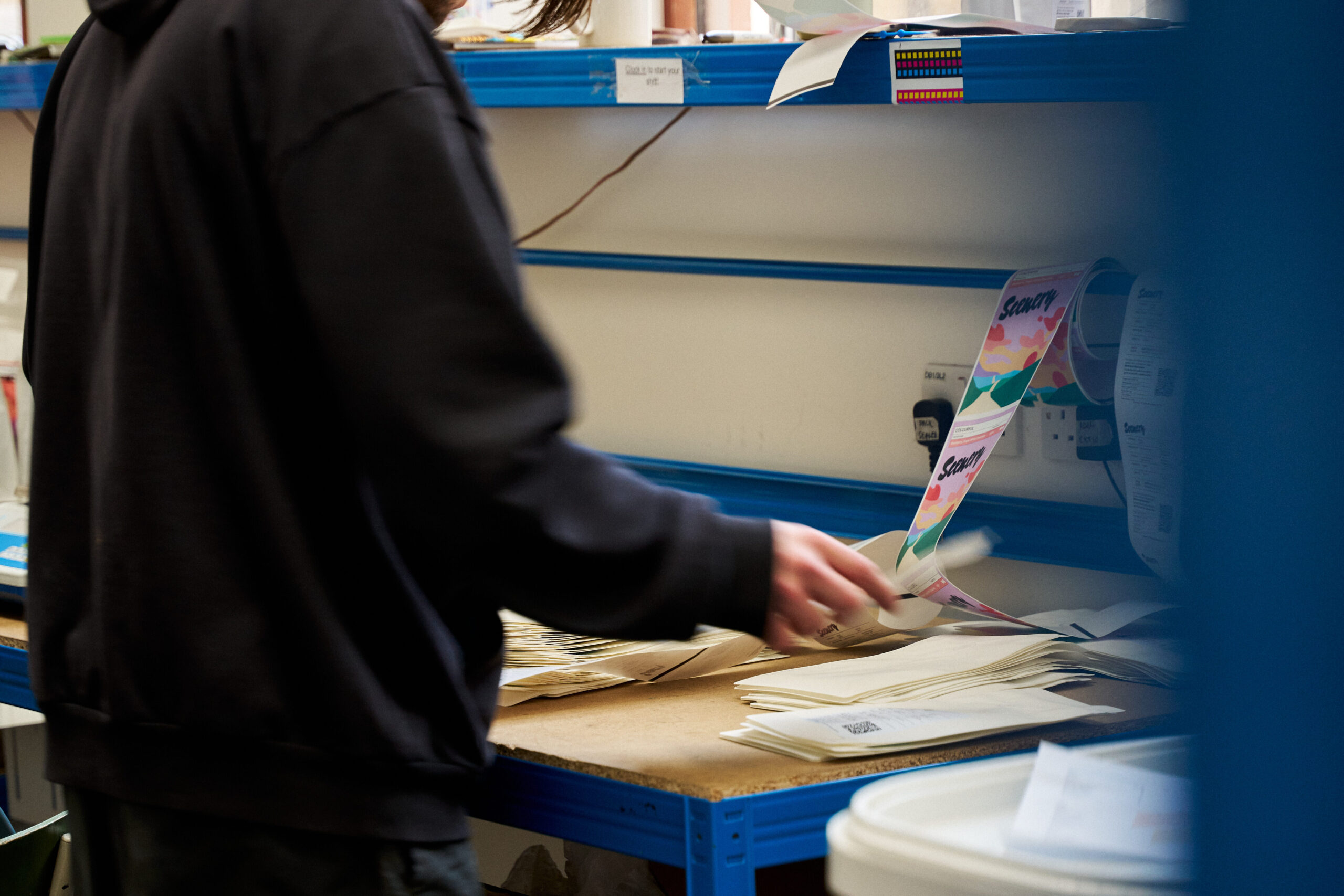
In the roasting room at Scenery, someone lifts a bucket of coffee onto a set of scales and scans a barcode. The system recognizes the coffee, records the weight, and updates the roasted stock count. Nobody writes anything down. Nobody types anything in.
Three years ago, the same job was done with masking tape.
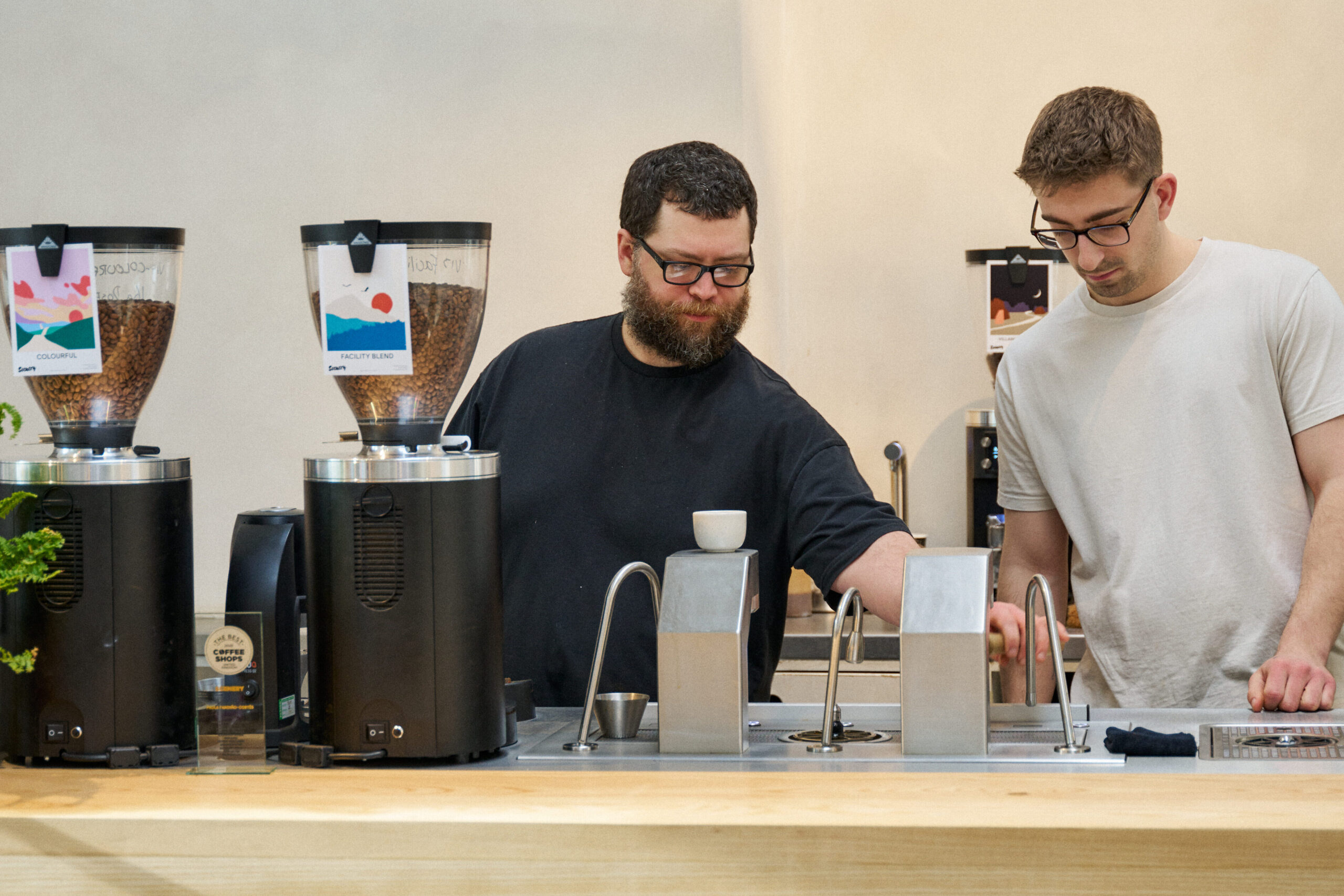
Alex Wallace is a co-founder of Scenery, a roastery, cafe, and kitchen in central London with a team of about 25 people. He has 8 years with Cropster behind him, 5 at Caravan London, where he started as a quality control assistant and left as head of quality across 3 sites, and 3 more building Scenery.
At Scenery, he runs the coffee program end to end. He buys the green, forecasts it against sales, gives the roasting team direction on how each lot should be roasted, and cups and writes every release himself. The daily roast schedule now belongs to his team, which frees him to work further upstream on the pipeline that feeds it.
That pipeline moves fast. Scenery released 100 single origins last year and is on track for 150 this year, at 2 to 4 new coffees a week.
Why Scenery started building
Every roastery works differently. Storage layouts, packing requirements, planning cycles, label formats, none of it looks the same from one site to the next. Scenery’s own way of working is specific enough that Alex wanted his systems shaped around it exactly.
He did that without an engineer on staff.
I wouldn’t call myself a developer or programmer. I am a vibe coder.
The API in practice
In plain terms, an API lets two pieces of software talk to each other directly, moving data automatically instead of someone retyping it by hand. Cropster’s Business Systems Connectivity (API) opens that line to its own data: production records, green lots, roast records, so a customer can connect it to whatever else runs their business.
Here is what Scenery built on it.
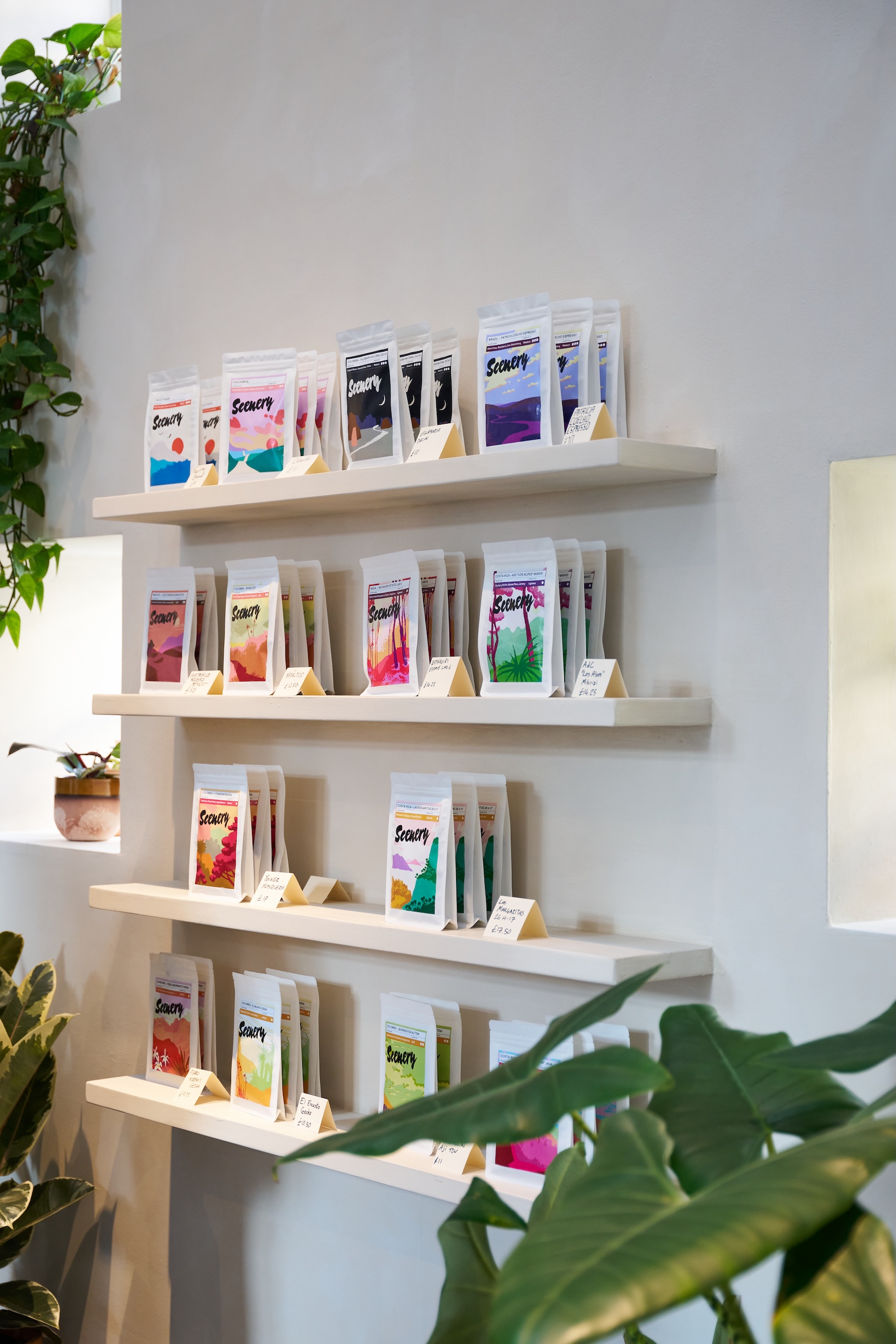
- Custom label printing. This is where the rest of the pipeline starts. Scenery prints its own front and back labels in-house, and needed a specific format: a batch code and a barcode on every bag, including post-roast blends. Alex built a label system that looks up the current roast through the API and prints to Scenery’s own printer in Scenery’s own format.
- Automatic stock counting. Because every coffee now leaves the roasting room with a scannable code, counting roasted stock became a scanning job rather than a clipboard job. A scale and a barcode scanner, with the API checking each scan against Cropster’s product records, keep the roasted stock count current through the day.
Roasted stock was the piece Alex found hardest before this. He always knew his green position. He rarely knew how much roasted coffee was on site, which is an uncomfortable thing not to know when your storage space is small, and your delivery schedule is tight. - A batch calculator. That stock count feeds the calculator, which pulls incoming orders, current stock, and target par levels, and tells the team how many batches of each coffee to roast. The calculator has existed at Scenery since the start. It used to run on manual entry. Now it runs on data that arrives on its own.
- A central coffee traceability platform. Not part of Cropster, but the thing that bridges it to everything else. Alex built a platform where every new coffee gets one record, entered once. From there, the platform pushes the details where they need to go: to Shopify so the coffee goes on sale, to Trello as a design brief for the bag artwork, to Mailchimp for the release email, and into the layout software that produces the back labels. Before this, the same traceability details were retyped into four systems.
The Cropster API is what brings that platform together with production. A smart picker, currently reaching the production floor, resolves internal codes, Cropster codes, and profile codes into one lookup, so nobody has to hold three naming systems in their head. Every coffee now carries end-to-end linkage. No system remains an island. - A sampling and cupping tool. Alex built his own, with the same barcode printing. It feeds a forecasting sheet that ties sample data to internal lot codes, and that sheet can promote a coffee straight into Cropster’s green inventory using the create green lot endpoint. Sample code, internal code, and Cropster code, all linked, all the way through to the copy he writes about the coffee.
Alex describes where that leaves them:
Now we have the API we can just make so many things work better… pretty much every single system of our pipeline speaks to each other now.
The part that surprised us
We asked Alex how many hours all of this saves him. He wouldn’t answer, and his reason is better than a number: “I can’t quantify how much time I’m saving because I’m still working flat out. I’m just doing more stuff, more productive.”
He points to Jevons’ paradox. When something becomes easier to access, people don’t consume less of it. They consume more. Cheaper energy doesn’t reduce energy use. More memory doesn’t make programmers frugal. Time returned to a roastery doesn’t turn into free afternoons.
It turns into this. Scenery is on track for 150 single-origin releases this year, up from 100. Alex rebuilt the entire quality system in that same period. Headcount in the back office did not change.
The work that disappeared was copy-pasting. The work that replaced it was buying better coffee, forecasting further out, and writing about what they release.
If there’s a lot of copy-pasting, if there’s a lot of lookup tables that involve exporting green inventory, importing into your own ERP, then it’s a no-brainer.
Alex Wallace, Scenery
What’s next
Alex is already thinking about what he’d build next. Sample and quality data, roast schedule access, and targeted lookups are all on the roadmap, and Scenery’s setup shows why they matter.
The more of Cropster’s data a roastery can reach directly, the more of its own pipeline it can shape.
Image credits: Martyna Wlodarska
Reclaim the productivity lost in fragmented systems with Cropster. Contact us by clicking on the button below.