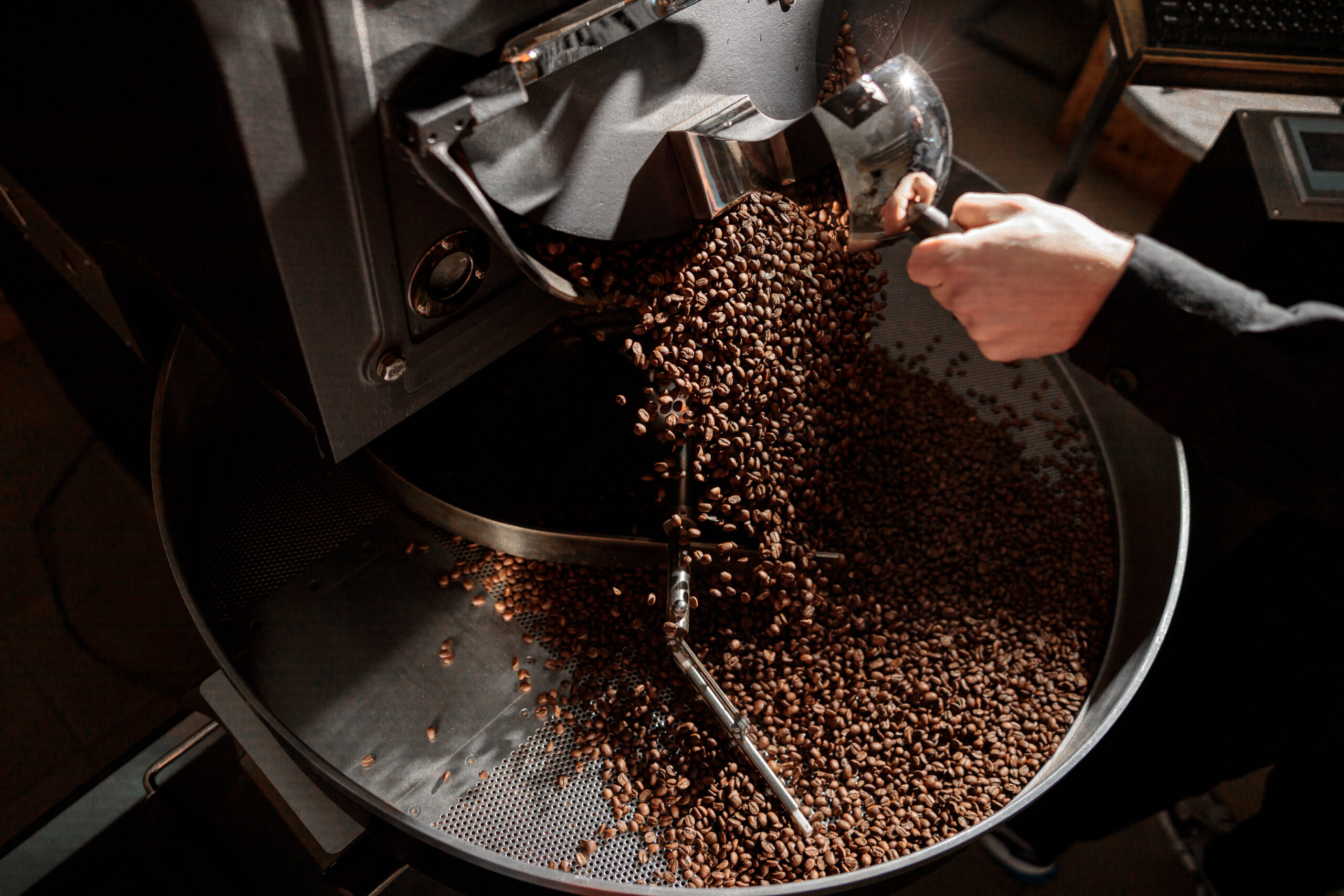
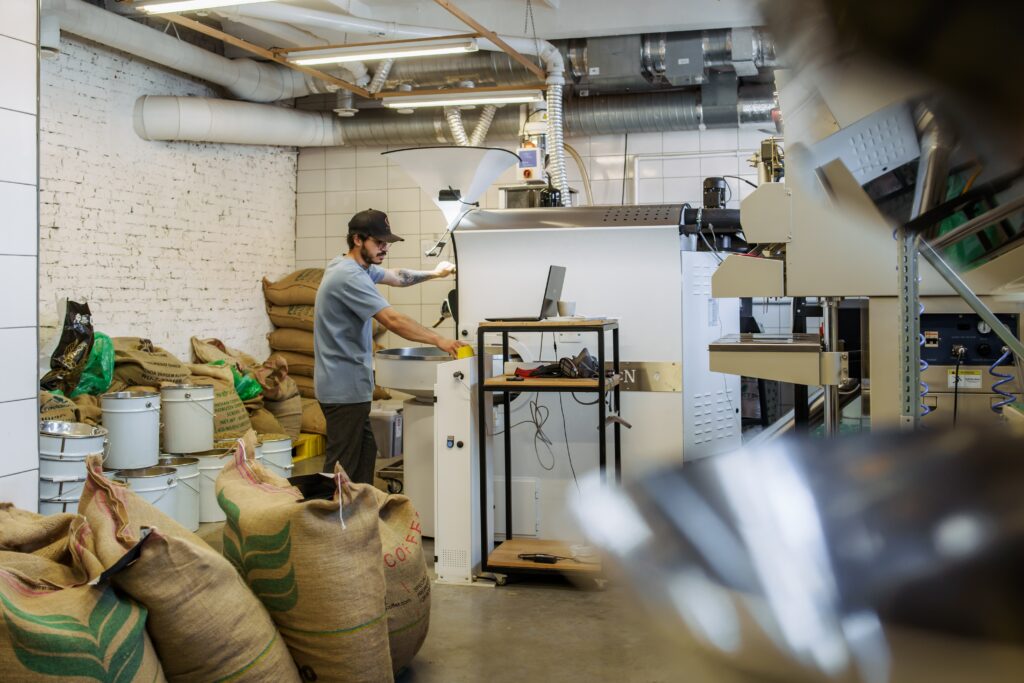
Grind roasts about 15 tons of coffee a week for its London cafes and international sites. Howard Gill, Grind’s Head of Coffee, holds every batch to an end temperature within 0.25°C of target and checks each one in Cropster. In March, 72% of roasts landed inside that line.
Cropster is a better source of truth for inventory than anything else I’ve seen in multiple very expensive softwares. It is an absolute no-brainer for tracking roasts in real time and learning why things taste good or bad
Howard Gill, Head of Coffee, Grind
From 3 cafes to a roastery
Grind didn’t always roast. It ran 3 cafes and bought its coffee from Small Batch Coffee. By the time Howard arrived, he had about 20 years in the industry, 2 of them as a production roaster at Alchemy. When he set up Grind’s roastery 10 years ago, Cropster was the first thing he bought.
The real-time tracking of roasting was just an absolute no-brainer; we have to have it, he says. I’m very strict on roast profiles, and I have really tight goals that I try to hit, and I always have.
The challenge
Grind now roasts about 15 tons of coffee a week, more than 10,000 batches a year, across London and its international sites. Howard set the bar high from the start: end temperature within 0.25°C of target, total roast time within 10 seconds. Holding that line got harder as volume grew.
The other challenge was where to find the truth about production. For Howard, that means starting from the actual weight roasted, the number he trusts.
How Grind uses Cropster
Cropster is where Howard tracks every roast against those goals in real time, and where Grind’s roasting team goes back to understand what happened on a curve. The team cups every batch from the day before, first thing Monday and again on Friday. When a coffee stands out, for better or worse, they pull up Roast Compare and look at the curve. Green coffee changes as it sits, so Grind keeps updating its reference profiles to match, adding half a degree to the end temperature on a coffee that’s aged, for example, once cupping shows it needs it.
The results
In March, 72% of Grind’s roasts finished within 0.25°C of target end temperature, and 40% hit every goal, roast time included. That was at about 15 tons a week, with every batch measured against the same 2 lines Howard set on day one.