Which spreadsheets to retire first
| Cropster
A recap of our live walkthrough with Thijs van Meurs, including what roasters asked at the end.
Your roastery spreadsheets work.
That is what makes this so hard to think about. The tabs hold, the formulas calculate, the orders go out on time. Nothing is broken, so nothing gets fixed.
But it is not a system. It is a system plus you, and the two cannot be separated. Hand it to someone on a Tuesday morning and watch what happens.
The other cost is quieter. Every tab you add puts one more number somewhere else, so the day fills up with switching windows to find a figure you already own. You are never looking at the whole thing at once. You have stopped noticing that you cannot.
So the useful question is not whether to abandon spreadsheets. It is which one goes first, and what has to be true before the next one can follow.
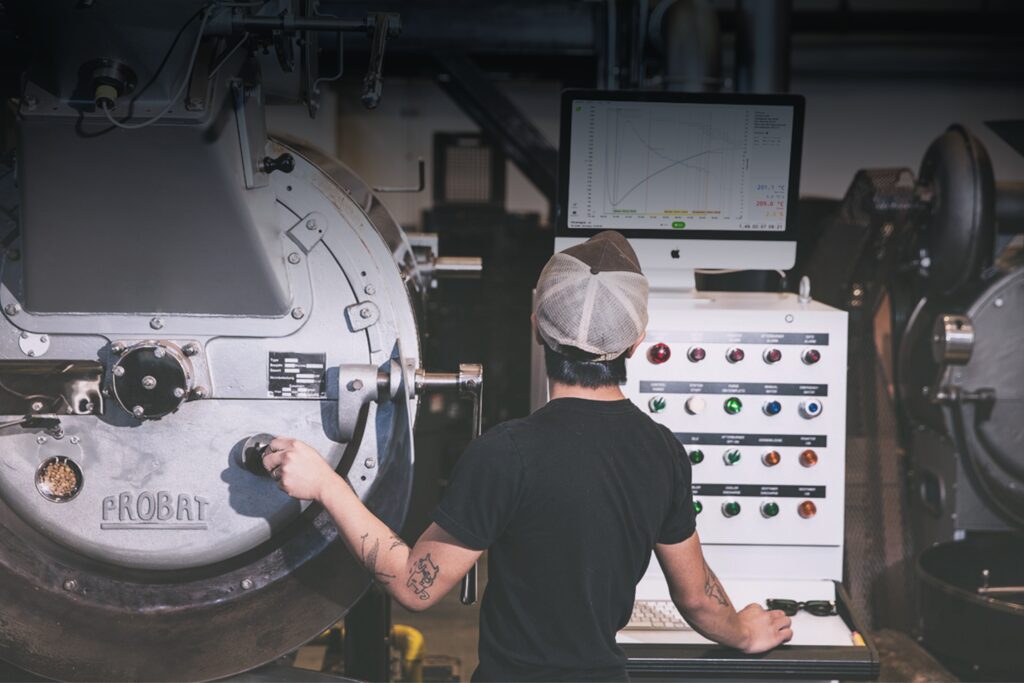
Thijs van Meurs spent 15 years roasting in London and Amsterdam, in production, in green buying, and as head of roasting, and he built exactly these spreadsheets. Loads of them, layered with hidden formulas, links between tabs, held together beautifully as long as he was the one running them. He walked through what replaced them, live, on real screens, in 40 minutes.
First out: green inventory
The question is simple. How much of this coffee is left, and where is it? Answering it properly can take a sheet, a shelf, and someone else’s memory.
Green inventory puts every lot in one view. What you have, where it sits, what it cost, what it is worth now, moisture, sensory history, every sample ever cupped against it.
Meron put the result in a way most roasters would hesitate to say out loud: they trust what the software tells them about their stock more than they trust walking into the warehouse and counting it.
Alongside it goes roast comparison. In the session, Thijs pulls up 3 real roasts of the same coffee. One is bitter and burnt. One is baked, hay, a little vanilla. One is blueberry and chocolate. Same coffee, 3 curves, and you can see exactly where they separate. He marks one of them, and from tomorrow morning every roast of that coffee has something real to aim at instead of a memory of the last good one.
“You can say whatever you want about the roast curve,” he adds, “but in my opinion, if it tastes good, it’s great.”
Then the production plan
Somewhere in your week, there is a person who works out what needs roasting. They gather the orders, check what is already bagged, adjust for what is short, and turn it into a list. It takes as long as it takes, and it happens again the next day.
Thijs did it with a stack of order sheets and a coffee, half an hour before anyone else arrived, ticking off every 250-gram bag, every one-kilo bag, every 3-kilo bag. He liked that half hour. It was still half an hour, every day, before the roaster was even warm.
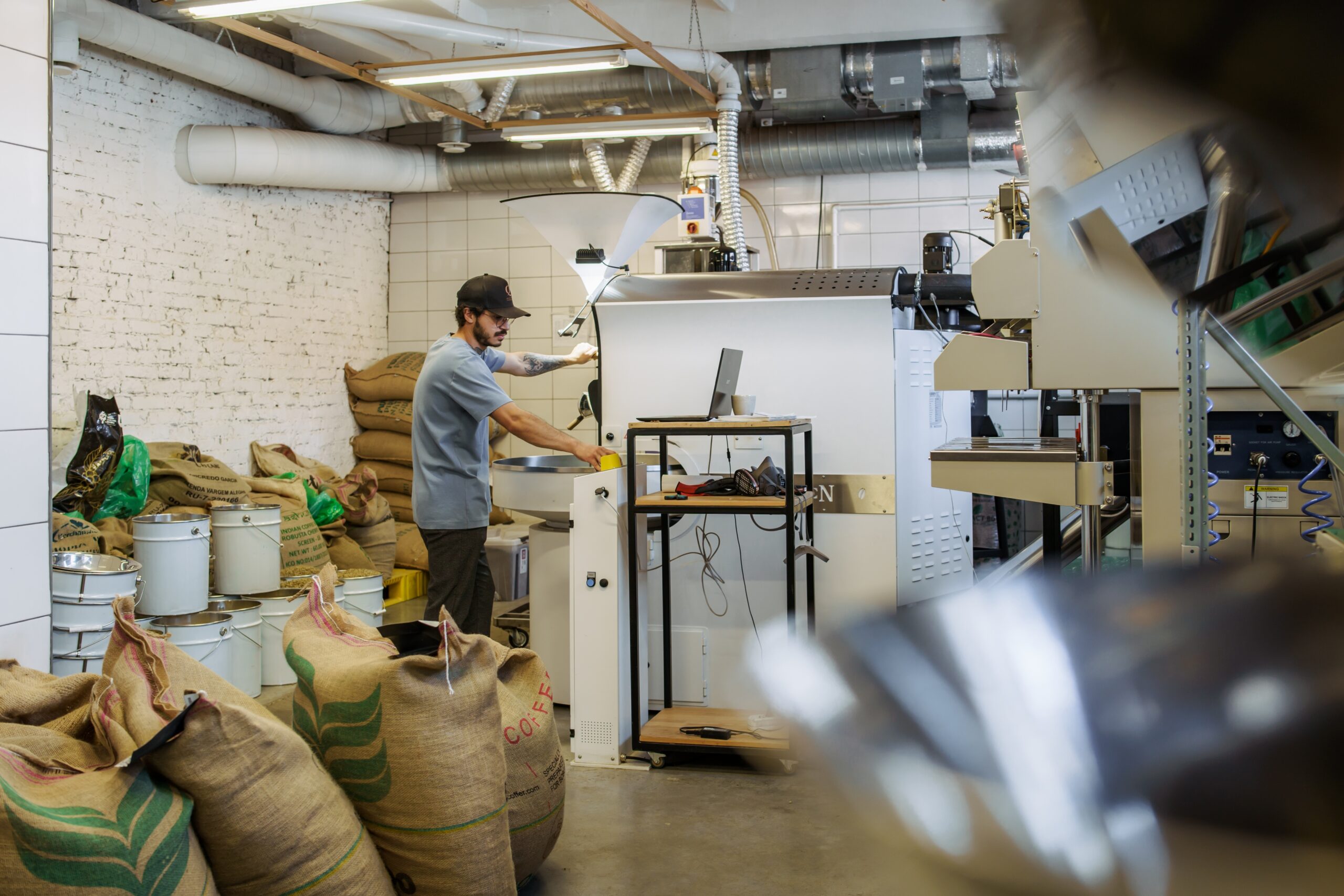
For Stefano at Dak, it now means walking into the roastery and seeing the day’s plan already there, instead of building it by hand first.
Then Thijs publishes a schedule on screen and says: “That’s the whole half an hour that I used to do on that little bar with my Americano, turfing all of those little orders off.”
This is the longest stretch of the walkthrough and the one to watch properly. Orders arrive from your shop and your wholesale channel, the system works out what actually needs roasting once your existing stock and your minimum levels are accounted for, and the schedule is published before anyone unlocks the door.
One detail from the Q&A that extends this. A roaster with 18 wholesale accounts does not have to chase them. Give the cafe managers access, and they place their own orders, which ends the cycle of messaging them and waiting for a reply.
Then the rules you keep in your head
Every roastery runs on rules that were never written down. This coffee does not go past 210 degrees. That one falls apart below 18% development time. Nobody wrote them down because everyone who needed them already knew them, which holds until the person who knows them is on holiday.
Thijs’s version was physical. “I used to have little post-its everywhere on the top of my screen, on the side of my screen,” he says.
Those rules can live in the profile instead, and something changed recently about when you see them. He demonstrates it mid-roast.
When you are buying by the container
At container volumes, a planning mistake costs differently. Buy short, and you are scrambling in the spring. Buy long, and you are paying to hold coffee you already own while the next shipment lands.
Thijs named it more plainly than most people will. His hardest job as a green buyer was never finding coffee. It was arriving in November with 2 containers landing and one still sitting unsold in the warehouse.
That is a planning problem, and it is where a new set of spreadsheets starts hurting. Samples scored side by side before you commit. Contracts with arrival dates, documents, and incoterms attached, linked back to the samples so you can follow a coffee from offer to arrival. Bags, labels, and valves tracked against each SKU, so you find out you are low on one kilo bags before the morning you need them.
What the room asked
34 questions came in, and they clustered in 2 places.
The first was integrations, by a wide margin. Shopify, WooCommerce, and ShipStation connect natively. Everything else goes through the API, and roasters are already running it in both directions with systems like Odoo, QuickBooks, NetSuite, and Bexio, pushing orders in and sending inventory back out.
The second came up more than once: can you use Cropster without connecting your roaster to it at all? You can. Green inventory, contracts, and cupping all work on their own, and green importers use it exactly that way. But Thijs pushed back on it, and his answer is the closest thing the session has to a thesis. Connecting the machine is not about the curve on the screen. It is about what stops being manual everywhere else once the roast is a piece of data instead of a thing that happened.
Worth knowing before you watch: everything on screen is a demo environment, not Dak’s or Meron’s accounts. Customer data is not shown to anyone. The stories are theirs, the screens are ours.